A Day in Eger
A baroque wine town under a castle that once stopped an empire. The train takes two hours; the cellars in the valley take whatever you give them.
The short version
- Direct and one-change trains run Budapest Keleti to Eger in about two hours; times at mav.hu.
- Eger Castle is the national epic in masonry: in 1552, some two thousand defenders under István Dobó — women of the town famously on the walls — held off an Ottoman army many times their size. The ramparts, casemates, and museum tell it well.
- The 40-meter minaret at the old town’s edge, one of Europe’s northernmost Ottoman survivors, opens its 97-step spiral to the certifiably non-claustrophobic.
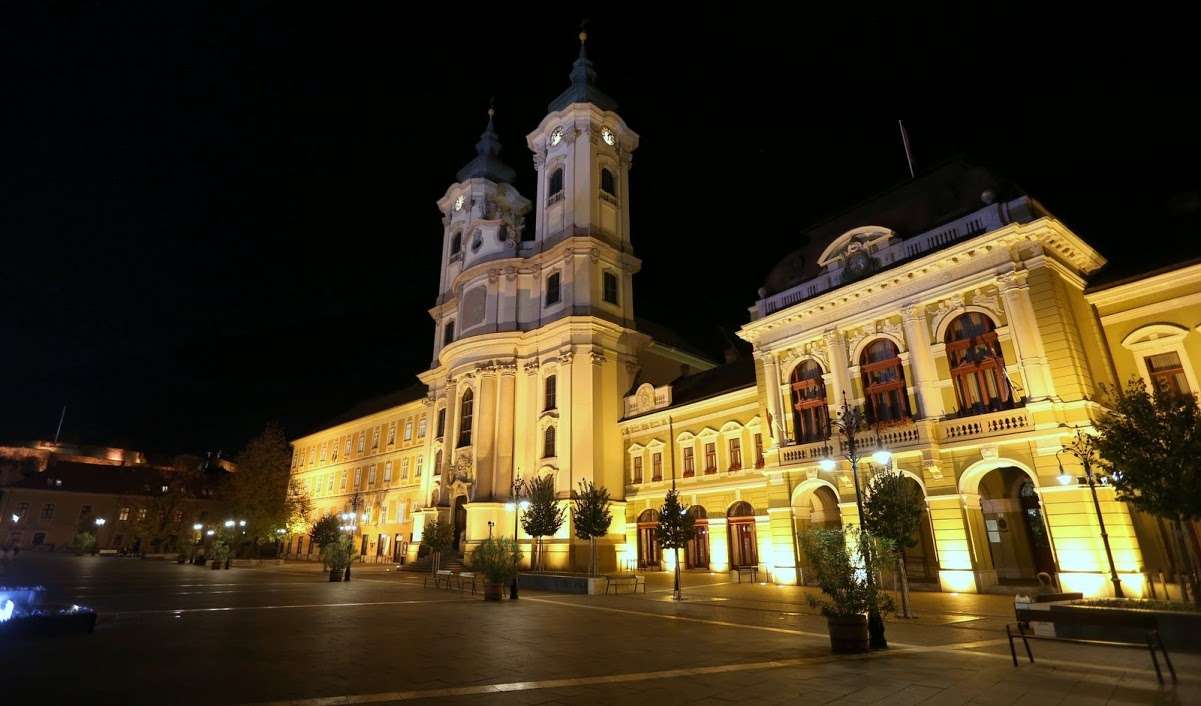
- The basilica and the Lyceum’s frescoed library fill the baroque quota; the main square under the castle handles coffee and langos.
- The Szépasszony Valley — the Valley of the Beautiful Women — rings a green hollow with dozens of family cellars pouring Egri Bikavér, the Bull’s Blood blend, straight from the barrel by pipette.
- Bikavér’s legend ties to the siege: defenders red-bearded with wine, attackers concluding they drank bulls’ blood. The blend outgrew the story — the valley’s better cellars prove it.

Getting there
Trains from Keleti reach Eger in about two hours, some direct, some with a tame change at Füzesabony — the timetable decides and neither version needs strategy. Eger’s station sits fifteen flat minutes from the main square. The valley of cellars lies another twenty-five minutes beyond the center on foot, or a short ride by the tourist road-train that exists for exactly this trip’s second half.
The day
Castle first, cellars second — the order is non-negotiable for reasons of both narrative and gravity. The ramparts give the town plan and the siege story; the underground casemates and the Dobó museum fill it in. Descend for the minaret climb and a langos on the square, then the Lyceum library’s frescoes for the quiet quarter hour. Mid-afternoon, walk out to the valley and work the cellar row slowly: pours cost little, the pipette theater is real, and the differences between cellars are the education. Dinner at a valley csárda or back in town, then the evening train — confirmed, per the alarm, hours ago.
When to go
May through October is the season — terrace weather in town, the valley in full operation, and the castle’s summer program of costumed history for those who enjoy it. The September harvest weeks bring festivals and the year’s best energy. Winter shortens cellar hours and empties the town into something moodier; the thermal baths become the argument then, steaming outdoors while the castle looms. July and August afternoons run hot — the casemates and cellars are, conveniently, cool.
Frequently Asked Questions
Is Bull’s Blood actually good?
The blend runs from tourist-grade to genuinely serious depending on the cellar — Eger’s better producers have rebuilt its reputation glass by glass. In the valley, follow the locals’ benches, not the biggest signs.
How does the 1552 siege matter today?
It is Hungary’s Thermopylae-that-worked — novelized, filmed, and taught to every schoolchild via ‘Eclipse of the Crescent Moon.’ The castle museum gives visitors the version without the homework.
Castle, valley, or baths, if time forces a cut?
Castle and valley are the identity; the thermal baths are the bonus Hungary attaches to everything. Cut the baths first, the minaret second, nothing else.
Can I overdo the valley?
Easily, which is what the alarm is for. Pours are small and cheap, cellars are many, and the arithmetic compounds. Two cellars with intention beats six by accident.
Eger or the Danube Bend for a Budapest day trip?
The Bend for river scenery and proximity; Eger for a complete town with a story, a cellar row, and half the crowds. Eger is the fuller day; the two-hour ride is its only tax.